
Odiar o proprio corpo depois do que viveu: corpo, trauma e imagem

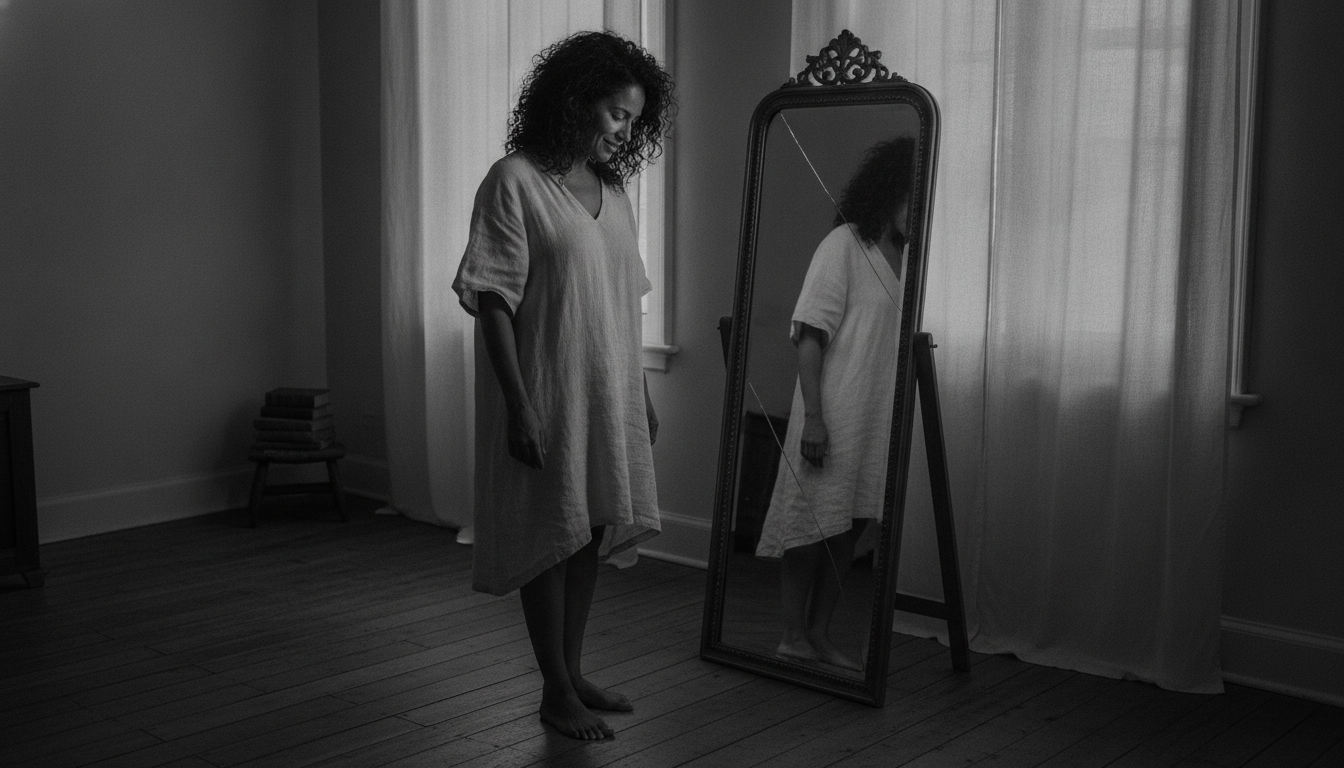
"I look in the mirror and I don't recognize myself." "My body has become foreign to me." "I don't feel like it's mine." When psychological experiences disrupt how you feel about your own body, it's not weakness or vanity — it's a documented effect of trauma on the body-mind system.
What Body Image Is
Body image isn't "how you see yourself" — it's broader. It includes:
- Sensory perception: how you feel your body from the inside
- Cognitive representation: what you think about it
- Emotional attitude: how you feel about it (shame, pride)
- Behavior: how you act (avoid, care for, test)
What Trauma Does to Your Relationship With Your Body
Body Hypervigilance
Constant attention to your own signals. Something mild becomes an alarm. An itch becomes a possible illness. The body stops being a home and becomes a source of threat.
Body Dissociation
During intense experiences, the body can literally become "not mine." It's a defensive response: the mind disconnects from sensations to protect itself from unbearable pain.
Chronic Body Shame
Bodies associated with threat become targets of shame. "My body betrayed me," "my body caused that" — common phrases.
"The body carries what consciousness could not hold. In many family systems, feeling is not safe."
- Dra. Patricia Furtado
Three Layers That Often Overlap
1. Real Cultural Pressure
Aesthetic standards that are not white, thin, and young are sold as ideals. This is structural pressure — it deserves cultural critique.
2. Personal History
Adult comments during childhood, bullying, threatening experiences that involved the body — these shape the relationship over a lifetime.
3. Biological States
Dissociation, hypervigilance, hormonal changes — they alter the experience of the body. This deserves clinical attention.
Paths to Rebuilding
1. Body- and Trauma-Focused Psychotherapy
Somatic Experiencing, Sensorimotor Psychotherapy, EMDR, CBT focused on self-image.
2. Regulating Somatic Practices
- Mindful bathing — water as a sensory safety signal
- Diaphragmatic breathing — re-inhabiting your own axis
- Skincare as an act of care, not performance
- Non-performative movement — returning to inhabit the body without judgment
3. Evidence-Based Self-Compassion
"Self-criticism releases cortisol and adrenaline. Self-compassion releases oxytocin and endogenous opioids."
- Dra. Ana Beatriz Barbosa
4. Working on Your Relationship With Food
When there is a significant change in eating behavior, specialized support (psychologist + nutritionist).
A Slow Path, but a Possible One
Rebuilding your relationship with your own body after trauma isn't fast — but it is possible. Every act of self-care tells the body again: "you are my home, not a threat zone."
e meu lar, não um campo de ameaca".Os impactos da pressão estetica na saude mental
Explicacao completa sobre a sindrome de burnout com a psicologa Eymi Rocha.
Por Que Você Nunca Se Sente Bom o Suficiente - PodPeople Inversó o esgotamento mental
Sinais praticos para identificar o esgotamento antes que ele se torne crônico.
- [1] Cash, T. F., & Pruzinsky, T. (2002). Body Image: A Handbook of Science, Practice, and Prevention. New York: Guilford Press.
- [2] Neff, K. D. (2003). Self-compassion: An alternative conceptualization of a healthy attitude toward oneself. Self and Identity, 2(2), 85-101.
- [3] Ogden, P., & Fisher, J. (2015). Sensórimotor Psychotherapy. New York: W. W. Norton.
- [4] Levine, P. A. (2010). In an Unspoken Voice. Berkeley, CA: North Atlantic Books.
- [5] Murnen, S. K., & Smolak, L. (2018). The Oxford Handbook of the Psychology of Appearance. Oxford: Oxford University Press.
As referencias listadas são obras fundamentais da área de saude mental no trabalho e psicotraumatologia. Este artigo e de caráter informativo e não substitui avaliação clínica individualizada.

Autoestima depois do trauma: reconstruir a relacao consigo mesma
How o trauma afeta a autoestima e caminhos baseados em TCC e EMDR.
Ler artigo →
Ansiedade social: o medo de ser visto que paralisa
A vergonha do corpo geralmente convive com a ansiedade de ser visto.
Ler artigo →
Gratidao: a prática simples que reprograma o cerebro
Práticas diarias de gratidao pelo proprio corpo como caminho de cura.
Ler artigo →