
Maternidade e culpa: a carga invisivel que carregamos

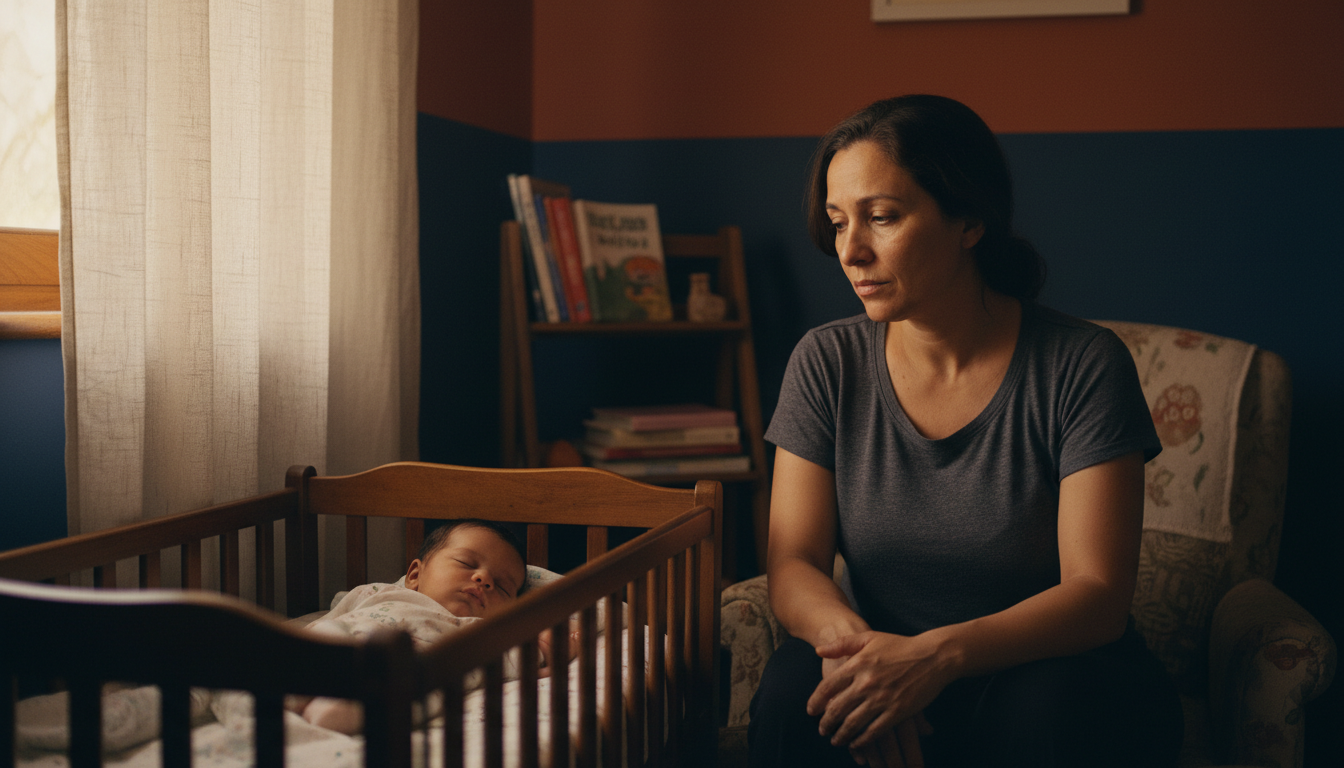
Motherhood is often described as an instant, complete, unconditional love. For some women, that is exactly what it is. For others — it is the source of a shameful pain that goes untold.
Postpartum guilt, even in women who deeply love their children, is common. And it is not failure — it is a sign of emotional complexity.
What Is Postpartum Guilt
There is a spectrum of emotional experience in the postpartum period:
- Baby blues: 3–5 days of emotional lability, occurring in ~80% of women.
- Postpartum depression: clinical depression — feelings of hopelessness, loss of interest, sleep and appetite disturbances. Affects 10–15%.
- Postpartum anxiety: intense, ruminative worry about the baby's health.
- Postpartum psychosis: rare (~1–2 in 1,000), a psychiatric emergency.
- Persistent guilt: not necessarily clinical depression — it can be deep guilt without depressed mood.
"I loved my son more than anything. But for months I was afraid to admit, even to myself, that motherhood was not what I expected. The guilt kept telling me: You are a bad mother."
Where This Guilt Comes From
1. The Cultural Ideal of the "Perfect Mother"
Culture, media, and even "motherhood literature" sell a romanticized image: mandatory love at first sight, total sacrifice, always happy, instinct knows everything. When reality does not match the fantasy, guilt shows up: "something must be wrong with me."
2. Interrupted Identity
Motherhood reorganizes your entire life — sleep, career, sexuality, relationships, priorities. There is a period when a woman is "nothing" — neither the professional she was, nor the mother she is expected to be.
3. The Invisible Mental Load
Even with present partners, the coordination of family life falls on the mother. And this mental load is silent.
4. Comparison with Other Mothers
Social media showcases romanticized motherhoods. Comparison with friends, sisters, or mothers-in-law deepens the guilt.
5. Previous Psychological Experiences
Women who come from childhoods where feeling and caring were unsafe often struggle to trust their own maternal capacity.
Types of Postpartum Guilt
- Guilt for feeling angry: Why am I angry at my baby?
- Guilt for not feeling it all: I haven't gotten over the birth. I am not happy.
- Guilt for wanting to go back to work
- Guilt for staying home: I can't take it anymore.
- Guilt for wanting to be loved back
- Guilt for not loving enough
None of these guilts means a lack of love. They are signs of emotional complexity.
The Impact of Persistent Guilt
- Isolation (the mother cannot talk about what she feels)
- Constant rumination about "being a good mother or not"
- Difficulty asking for help
- Daily shame
- Decisions made from guilt (extremes)
- Impaired relationship with the baby
- Increased risk of chronic postpartum depression
Paths Toward Processing
1. Postpartum-Focused Psychotherapy
CBT, interpersonal therapy, EMDR. Specialists in maternal mental health do exist.
2. Mother Support Groups
Structured groups (online or in-person) allow you to see that the shared experience is common.
3. Separate Identities: Woman AND Mother
Return to "seeing yourself" beyond motherhood — with your own spaces, hobbies, and relationships.
4. Accept Practical Help (and Ask for It)
Cleaning the house, taking the child to the park, offering time for a warm bath. Accepting help does NOT mean you are incapable.
5. Name the Guilt Without Identifying With It
"I am feeling guilt right now" is different from "I am guilty." Guilt is an emotion — not an identity.
6. Lower Expectations
"Good enough is the goal. There is no perfection in motherhood — there is repetition, patience, and a love that builds itself."
— Donald Winnicott
Motherhood Does Not Have to Be Only Sacrifice
Real motherhood is ambivalent. It includes deep love and extreme exhaustion. Pleasure and boredom. Connection and the desire to be somewhere else. Expecting to feel all of this is normal.
Guilt arises when there is no room for complexity. If this persistent guilt accompanies you, it is treatable. Motherhood can continue, and improve, with the right support.
"I was a rejecting mother before motherhood — I felt I should not be a mother. When I started postpartum therapy, I understood: the guilt I carried belonged to the girl, not the woman. And it had a solution."
— Common anonymous account in maternal mental health practice
If you would like to talk, the first step can be simple: an initial conversation, with no strings attached.
ma escuta inicial, sem compromissó.Cerebro, autocritica e o mito da mae perfeita (Pedro Calabrez)
Explicacao completa sobre a sindrome de burnout com a psicologa Eymi Rocha.
Autocritica, autocompaiхao e o esgotamento materno (Dra. Ana Beatriz) o esgotamento mental
Sinais praticos para identificar o esgotamento antes que ele se torne crônico.
- [1] Winnicott, D. W. (1965). The Maturational Processes and the Facilitating Environment. London: Hogarth Press.
- [2] O'Hara, M. W., & McCabe, J. E. (2013). Postpartum depression: Current status and future directions. Annual Review of Clínical Psychology, 9, 379-407.
- [3] Stern, D. N. (1995). The Motherhood Constellation. New York: Basic Books.
- [4] Beck, C. T. (2002). Postpartum depression: A metasynthesis. Qualitative Health Research, 12(4), 453-472.
- [5] Spinelli, M. G. (2018). Perinatal and Postpartum Mood Disorders. Cham, Switzerland: Springer.
- [6] Wolynn, M. (2016). It Didn't Start with You [Não começou com você]. New York: Viking. Título em pertuguês publicado pela Editora Alaúde (2017).
As referencias listadas são obras fundamentais da área de saude mental no trabalho e psicotraumatologia. Este artigo e de caráter informativo e não substitui avaliação clínica individualizada.

Autoestima depois do trauma: reconstruir a relacao consigo mesma
Vergonha, culpa e a voz interna critica. Caminhos para reconstruir.
Ler artigo →
Luto não e depressão: como Elaborar perdas sem adoecer
O luto da identidade anterior a maternidade também e valido.
Ler artigo →
Perdao: o que a psicologia sabe (e o que não se aplica)
Autoperdao - quando a maior cobranca vem de dentro.
Ler artigo →